The blue halite in Morsleben, Germany: A natural lyoluminescence dosimeter

The blue halite in Morsleben, Germany: A natural lyoluminescence dosimeter

Sometimes our technology ends up in places we’d never predict – like deep underground salt formations in Germany. 

In the recently published paper “The blue halite in Morsleben, Germany: A natural lyoluminescence dosimeter?” (Biernacka et al., 2025), researchers explore whether naturally blue halite can act as a record of past radiation exposure.

To support this work, μDOSE+ was used for environmental gamma dose rate measurements, providing key input data for understanding the radiation history of the studied samples.

We’re genuinely proud to see μDOSE+ contributing behind the scenes to such interdisciplinary research – connecting radiation physics, geology, and luminescence science.
It’s a reminder that reliable field measurements matter, even in the most unexpected scientific questions!

Well done to the authors on a fascinating study
The paper is available open access.

Biernacka M, Majgier R, Staninski K, Kaczmarek M, Zelek-Pogudz S, Sądel M, Szufa KM, Blanke H and Kreutzer S, 2025, The blue halite in Morsleben, Germany: A natural lyoluminescence dosimeter? Journal of Luminescence 280: 121088, DOI: 10.1016/j.jlumin.2025.121088. 


Environmental Gamma Dose Rate Measurements using CZT Detectors

Environmental Gamma Dose Rate Measurements using CZT Detectors

We’re proud to share that μDOSE+ was used in recently published peer-reviewed research in Geochronology!

In the paper “Environmental Gamma Dose Rate Measurements using CZT Detectors” (Kreutzer et al., 2025), the authors investigate the use of portable CZT detectors for in-situ environmental gamma dose rate measurements – a key component in trapped-charge dating and geochronological studies.

μDOSE+ was applied in real field measurements and comparative analyses, demonstrating its reliability, sensitivity, and suitability for scientific research under practical conditions.

It’s a great moment for us to see our technology supporting independent academic research and being validated in a rigorous scientific context.
We’re proud that μDOSE+ can contribute to advancing environmental radiation measurements and geoscience research.  

Congrats to the authors on a great paper!
The publication is available in open access.

Kreutzer S, Martin L, Miallier D and Mercier N, 2025, Environmental gamma dose rate measurements using cadmium zinc telluride (CZT) detectors. Geochronology 7(3): 229–246, DOI: 10.5194/gchron-7-229-2025.


It’s Here! The First Official Paper on μGRAPHILINE is Now Available

It’s Here! The First Official Paper on μGRAPHILINE is Now Available

We are proud to announce that our newest open access publication μGRAPHILINE: Performance of an automatic combustion and graphitization system is now available online in Radiocarbon!

The article highlights the features and capabilities of our newest product, μGRAPHILINE, with reported performance and efficiency tests.

Kłosok K., Jędrzejowski M., Rakowski A., Ustrzycka A., Pawełczyk S., Kolarczyk A., Gosek M., Tudyka K. (2026). μGRAPHILINE: Performance of an automatic combustion and graphitization system. Radiocarbon, doi: 10.1017/RDC.2025.10180


First publication on μDOSE+ capabilities is out

First publication on μDOSE+ capabilities is out

The μDOSE+ System is an enhanced version of the recognised μDOSE System, which boasts numerous new features, described in detail in the just-published article by Tudyka et al. (2024).

The publication focusses closely on the key components that make the μDOSE+ System an advanced tool for radioactivity estimation: a unique triple scintillator setup (active shielding) to reduce background counts and improve the precision of dose rate measurements accuracy; additional ~59 kg of high purity copper shielding and optimised counting chamber geometry (passive shielding) for α and β counting efficiency increase; employment of pulse classification algorithms enhanced by UMAP/HDBSCAN* machine learning for precise differentiation between radiation particles and sensitivity enhancement; active 222Rn and 220Rn removal system to eliminate overcounting and allowing increased sample mass.

The reported advancements contribute to a significant reduction in background in the β counting window, improved α and β counting efficiency and easier sample handling.

New Study Unravels Middle Bronze Age Farming Techniques in Germany’s Western Allgäu

New Study Unravels Middle Bronze Age Farming Techniques in Germany’s Western Allgäu

A recent study has provided fascinating insights into the subsistence farming practices of the Middle Bronze Age (MBA) in SW-Germany’s Western Allgäu region. Utilizing a multidisciplinary approach, the research team combined archaeological evidence with sedimentary and biogeochemical analysis to reconstruct the ancient farming activities in this historically significant area.

The research focused on multi-layered colluvial and alluvial deposits near MBA settlements. These deposits were dated using optically stimulated luminescence (OSL) techniques and AMS radiocarbon measurements of charcoal, providing a detailed chronostratigraphic framework. The study revealed phases of deposition and land use during the MBA, correlating with recently excavated inland settlements in the region.  Multi-proxy investigations helped in reconstructing the subsistence farming practices of the era.

The results showed that the MBA economy in Western Allgäu was extensive and diversified. This reflects an adaptation of the MBA farmers to the harsh climatic conditions of the region, where crop yields were less predictable compared to other areas like near Lake Constance. The accumulation of charcoal and PAHs in MBA-related colluvial horizons is most likely associated with the use of fire to maintain an open landscape. Additionally, increased urease activity and the appearance of Juniperus indicate the importance of livestock farming within the MBA subsistence.

This study offers new perspectives on the subsistence strategies of MBA societies in agriculturally less favorable areas, providing a comprehensive understanding of ancient agricultural practices in the northern Alpine foreland. The findings have significant implications for our knowledge of Bronze Age farming and settlement patterns in the region.

References: 

Scherer, S., Höpfer, B., Deckers, K., Fuchs, M., Kandeler, E., Lehndorff, E., Lomax, J., Marhan, S., Poll, C., Wroth, K., Knopf, T., Scholten, T., Kühn, P., 2023. Archaeopedological reconstruction of Middle Bronze Age subsistence farming in SW-Germany from sedimentary archives in the Western Allgäu. Geoderma Regional (35). https://doi.org/10.1016/j.geodrs.2023.e00715

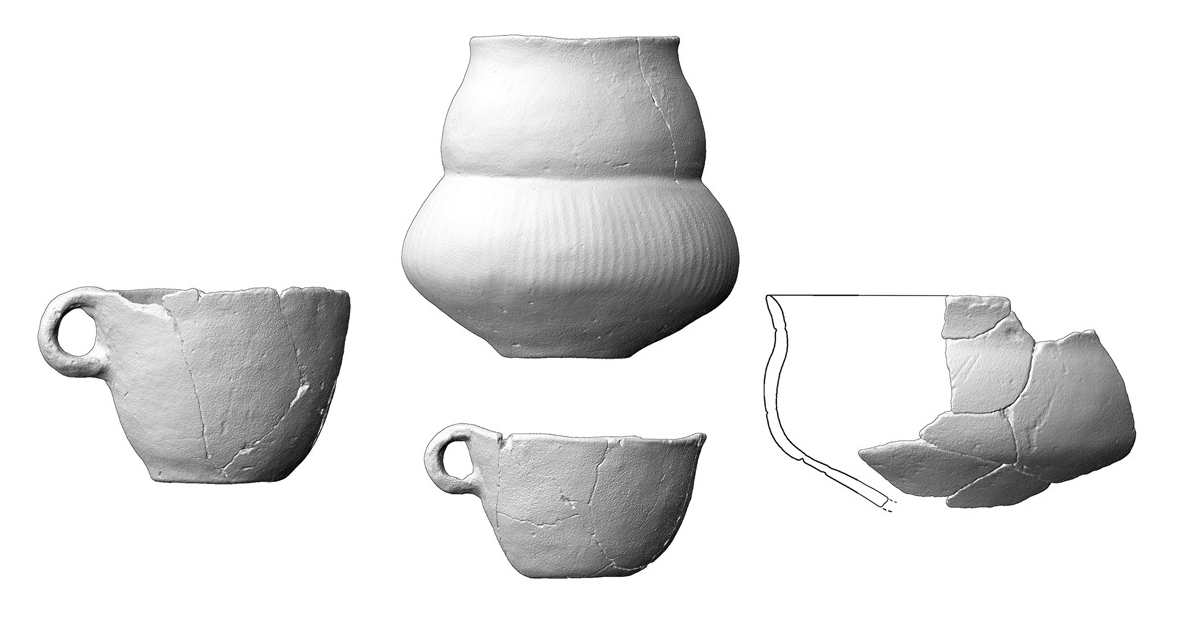
New Insights into Historical Mining Activities in Tarnowskie Góry, Poland

New Insights into Historical Mining Activities in Tarnowskie Góry, Poland

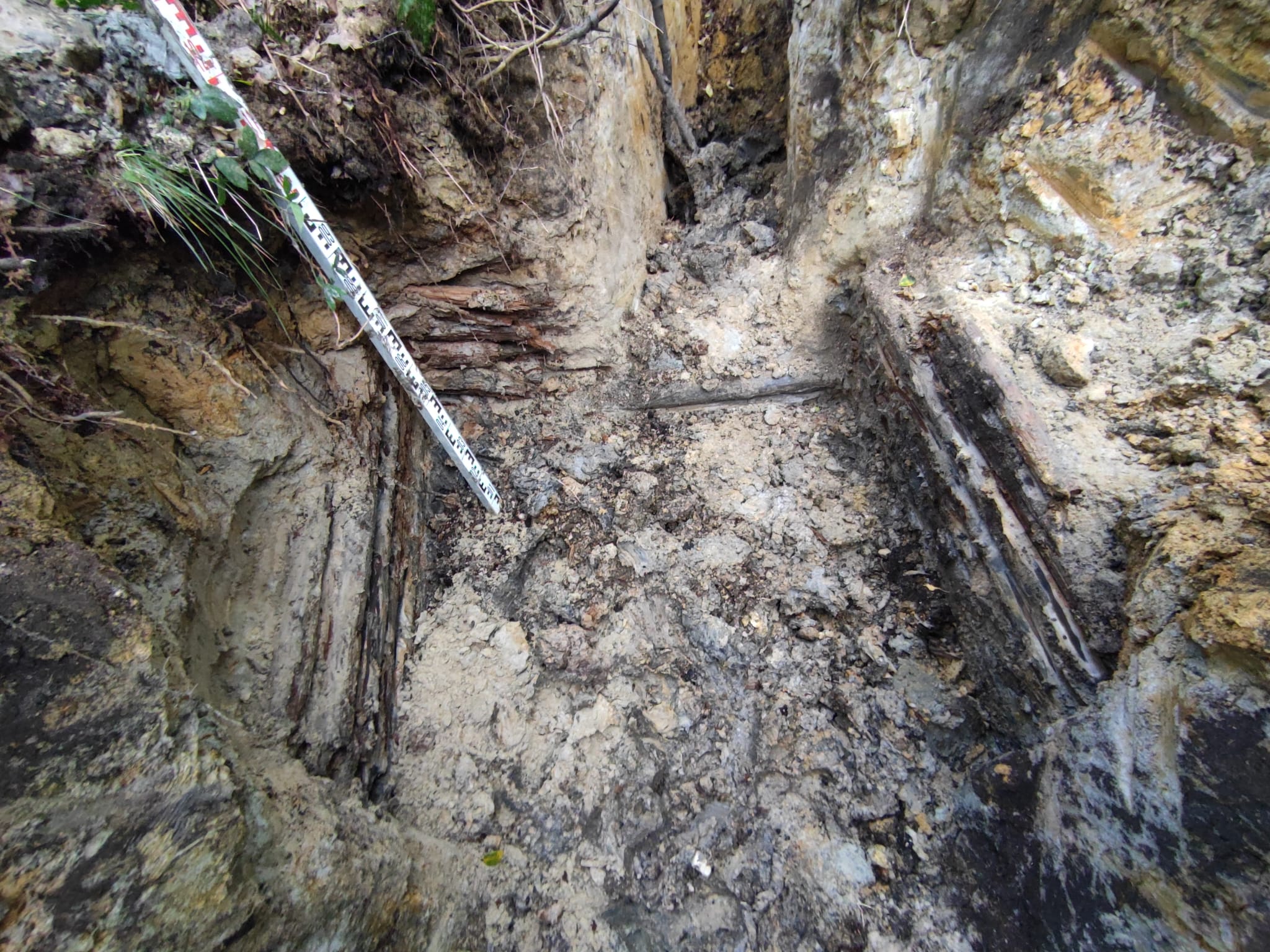
A recent study has provided fresh details on the historical mining activities in Tarnowskie Góry, Poland, dating back to as early as the 10th century. Researchers used a combination of Accelerator Mass Spectrometry (AMS), Optically Stimulated Luminescence (OSL), and dendrochronology to determine the age of mining shaft remains in the post-exploitation field of this region known for its lead ore and silver extraction from the 12th to the 20th centuries.

The AMS method yielded 12 results, with the majority of the dates ranging from 1435 to 1645 cal AD, aligning with the most intense mining period in the 16th century. However, two results pointed to significantly older periods, suggesting earlier mining activities potentially dating back to the beginnings of the Polish State. Dendrochronological analysis of construction wood found in the mines corroborated these radiocarbon dates.

OSL dating, on the other hand, provided much older dates ranging from 2.5 ka BP to 216 ka BP. These results were considered overestimated due to probable issues with the luminescence signal not being reset during sediment redeposition. Despite this, the quality of the luminescence signal was reported as satisfactory.

References:

Pawełczyk, F., Bolik, A., Błachut, B., Kamińska, A., Opała-Owczarek, M., Malik, I., Wojcik, M., Zakrzewska, Z., Pawlak, Z., Poręba, G., 2023. Development of Chronology for Historical Mining Shaft Remains in the Vicinity of Tarnowskie Góry Based on Radiocarbon, Luminescence and Dendrochronological Dating. Geochronometria (50). https://doi.org/10.2478/geochr-2023-0004

New Method Speeds Up Dating of Thar Desert Dunes

New Method Speeds Up Dating of Thar Desert Dunes

In a recent study, Nitundil et al. (2023) are exploring the potential of an innovative technique to rapidly estimate the age of dunes in India’s Thar Desert, significantly speeding up the process. The study primarily utilized a portable optically stimulated luminescence (POSL) reader, drastically reducing the analysis time to around 5 minutes per sample.

The findings indicate an eastward movement of the dunes, with the eastern sides being younger and accumulating sand at a faster rate. This new method not only provides a faster way to study the desert’s shifting landscape but also offers insights into environmental changes over time.

Additionally, the article mentions a comparison between the results obtained from the μDose system and the traditional Inductively Coupled Plasma Mass Spectrometry (ICP-MS). The two methods showed consistency within the margin of uncertainty, validating the reliability of the μDose system in supporting the POSL reader for rapid age assessments.

This innovative approach is set to transform the way researchers study and understand desert dynamics, providing a quick, reliable, and accessible means to track and predict changes in sensitive environments like the Thar Desert.

References:

Nitundil, S., Stone, A., Srivastava, A., 2023. Applicability of using portable luminescence reader for rapid age-assessments of dune accumulation in the Thar desert, India. Quaternary Geochronology (78). https://doi.org/10.1016/j.quageo.2023.101468

μDOSE System for Hazard Indices Estimation

μDOSE System for Hazard Indices Estimation

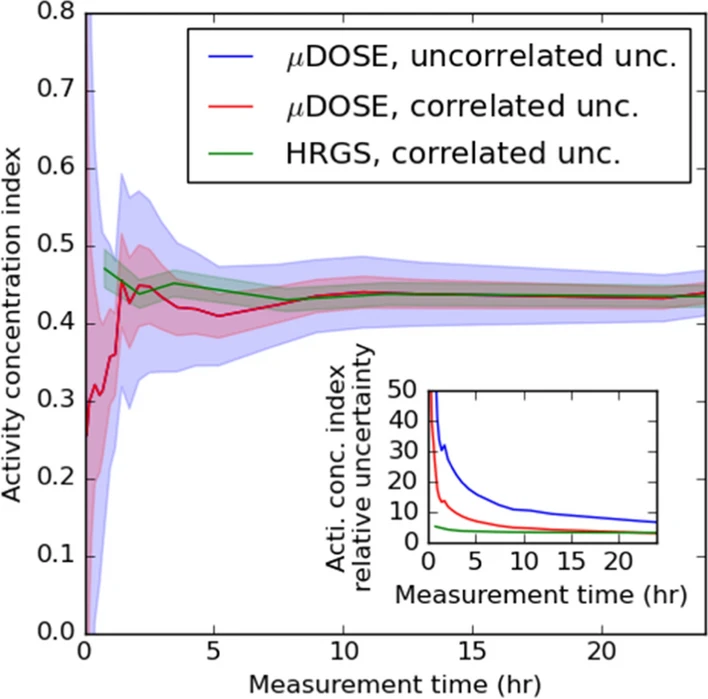
A recent publication by Rocznik et al. (2023) demonstrated the μDOSE’s capability in accurately estimating various hazard indices (HI), including activity concentration index, radium equivalent activity, representative level index, absorbed and annual gamma dose rates, gamma effective indices, and both external and internal radiation hazard indices. This research highlights the new possibilities offered by the μDOSE system, particularly in measuring HI in small samples of just 3.00 grams. The estimation of HI was based on α and β particles, as well as decay pairs of 220Rn/216Po, 219Rn/215Po, 212Bi/212Po, and 214Bi/214Po. This method provided correlated radionuclide estimates. By taking this correlation into account, HI can be calculated with increased precision. The hazard indices measured were then compared with the results from high-resolution gamma spectrometry.

Activity concentration index value uncertainty as a function of measurement time for HRGS (100 g samples) and μDOSE system (3.00 g samples) (from Rocznik et al., 2023)

References:

Rocznik, J., Pluta, J., Tudyka, K., Poręba, G., Szymak, A., 2023. A new fast screening method for estimating building materials hazard indices with correlated inputs. J Radioanal Nucl Chem. https://doi.org/10.1007/s10967-023-09197-5

New Publication Utilizes μDose Measurements to Study Archaeological Site in Idaho

New Publication Utilizes μDose Measurements to Study Archaeological Site in Idaho

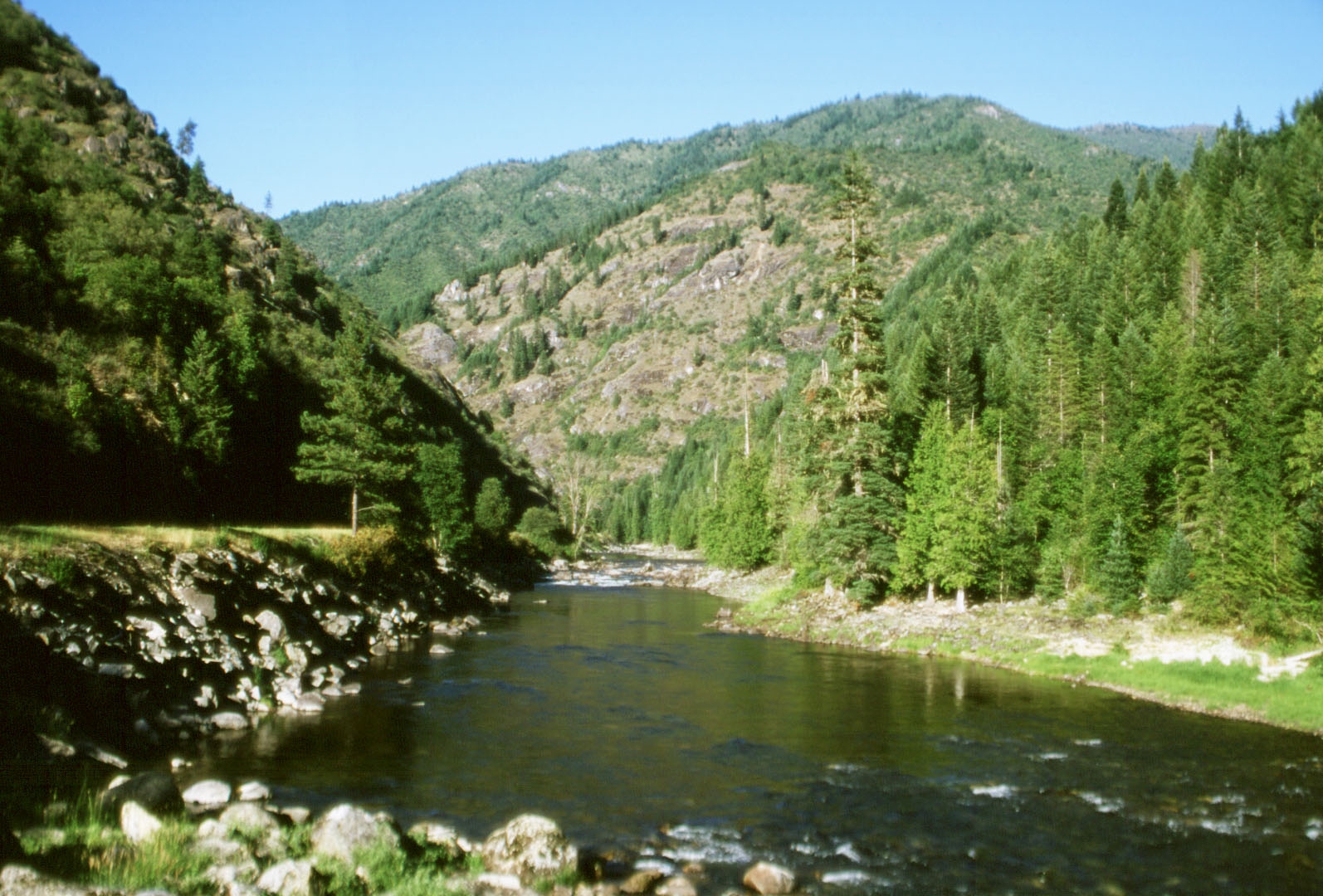
Scenic view of the Lochsa River in the Clearwater Forest of Idaho (United States) This photo was provided by and used with permission of the Idaho Travel Council ([1]) Please credit the Idaho Travel Council when used (licensed under CC BY 2.5)

Researchers have published preliminary findings from their reinvestigation of the Kelly Forks Work Center Site (10CW34), an archaeological site located on the North Fork Clearwater River in the Nez Perce-Clearwater National Forest, Idaho. The site, which dates back to the late Pleistocene to late Holocene period, was previously thought to contain components associated with the Western Stemmed Tradition.

The researchers utilized μDose for assessing dose rates for trapped charge dating. This allowed to assess the stratigraphy and geochronology of the site, as well as to study traditional Nez Perce use of the Clearwater River drainage. Their findings provide new insights into the site’s history and cultural significance.

Further research is needed to fully uncover the site’s potential and deepen our understanding of the region’s prehistoric human activity.

Justin A. Holcomb, Aayush Srivastava, Timothy C. Kinnaird & John C. Blong (2023) Revisiting Kelly Forks (10CW34): Current and Future Research at a Western Stemmed Tradition Occupation in the Nez Perce-Clearwater National Forest, Idaho, USA, PaleoAmerica, 9:1, 76-80, DOI: https://doi.org/10.1080/20555563.2023.2171745

New Interdisciplinary Study Uncovers Prehistoric Rural Settlement and Landscape Development in Northern Bavaria

New Interdisciplinary Study Uncovers Prehistoric Rural Settlement and Landscape Development in Northern Bavaria

A new interdisciplinary study on rural settlement and landscape development in northern Bavaria, Germany has been published. The study involved archaeological and geoarchaeological investigations supported by radiocarbon dating, optically stimulated luminescence dating (OSL), and palaeoecological analysis. The researchers aimed to identify unknown prehistoric rural settlement sites, determine site-specific soil erosion from colluvial deposits, and assess the composition of woodland from on- and offsite charcoal finds.

Figure adapted from Kothieringer et al. (2023).

The earliest evidence of human activities dates back to the Younger Neolithic period, while the Middle to Late Bronze Age (ca. 1400–800 B.C.E.) was marked by permanent rural settlement in a German central upland region. The researchers noted a peak in the Late Bronze Age, which they attributed to varying thicknesses of Bronze Age colluvial deposits, indicating land use practices that triggered soil erosion. The study also showed that Maloideae, ash, and birch were successional indicators after fire clearance during that period.

The settlement continued until the 5th century B.C.E, with a hiatus of 500 years before re-flourishing in the Late Roman and Migration periods (mid-3rd–5th century C.E.) and continuing into the Medieval period.

The study provides valuable insights into the prehistoric rural settlement and landscape development in northern Bavaria, and highlights the potential of OSL method with μDose measurements in archaeological research.

Kothieringer K., Seregély T., Jansen D., Steup R., Schäfer A., Lambers K., & Fuchs M. (2023). Mid- to Late Holocene landscape dynamics and rural settlement in the uplands of northern Bavaria, Germany. Geoarcheology, 38, 220– 245. https://doi.org/10.1002/gea.21952