New Publication Utilizes μDose Measurements to Study Archaeological Site in Idaho

New Publication Utilizes μDose Measurements to Study Archaeological Site in Idaho

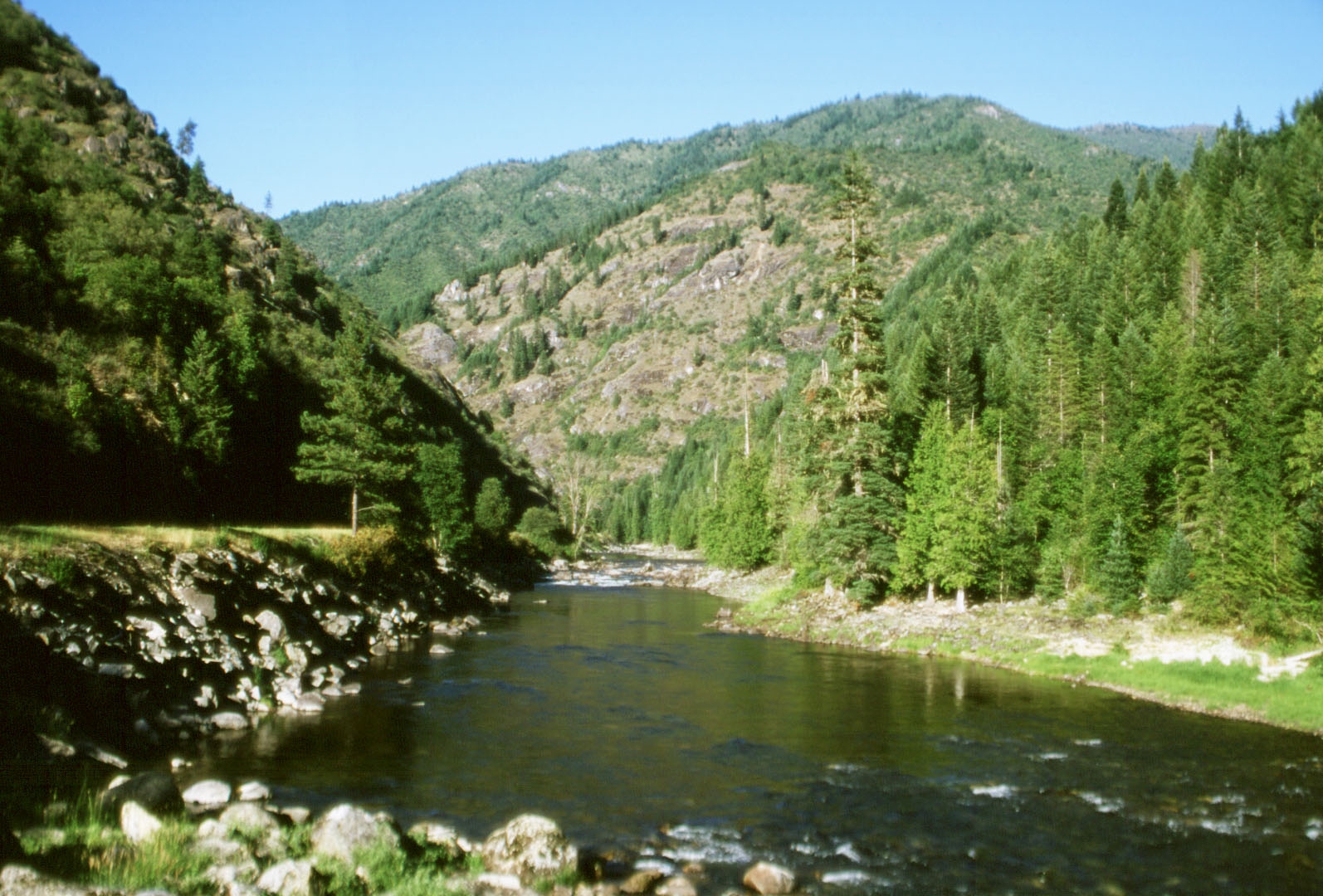
Scenic view of the Lochsa River in the Clearwater Forest of Idaho (United States) This photo was provided by and used with permission of the Idaho Travel Council ([1]) Please credit the Idaho Travel Council when used (licensed under CC BY 2.5)

Researchers have published preliminary findings from their reinvestigation of the Kelly Forks Work Center Site (10CW34), an archaeological site located on the North Fork Clearwater River in the Nez Perce-Clearwater National Forest, Idaho. The site, which dates back to the late Pleistocene to late Holocene period, was previously thought to contain components associated with the Western Stemmed Tradition.

The researchers utilized μDose for assessing dose rates for trapped charge dating. This allowed to assess the stratigraphy and geochronology of the site, as well as to study traditional Nez Perce use of the Clearwater River drainage. Their findings provide new insights into the site’s history and cultural significance.

Further research is needed to fully uncover the site’s potential and deepen our understanding of the region’s prehistoric human activity.

Justin A. Holcomb, Aayush Srivastava, Timothy C. Kinnaird & John C. Blong (2023) Revisiting Kelly Forks (10CW34): Current and Future Research at a Western Stemmed Tradition Occupation in the Nez Perce-Clearwater National Forest, Idaho, USA, PaleoAmerica, 9:1, 76-80, DOI: https://doi.org/10.1080/20555563.2023.2171745

miDose Solutions at MACh

miDose Solutions at MACh

miDose Solutions is excited to announce our presence at the upcoming Methods of Absolute Chronology (MACh) conference. We are honored to be a part of this event and to have the opportunity to showcase our innovative technology to the scientific community.

The 14th International Conference on Methods of Absolute Chronology is a significant event that brings together researchers and scholars from all over the world to discuss the latest findings and advancements in the field of chronology. We are proud to participate in this conference and present our products that can help researchers in this area achieve greater accuracy and precision in their work.

Our team will be present at the conference to provide live demonstrations of our solutions, answer questions, and discuss how our technology can be customized to meet specific research needs. We are excited to connect with researchers and scientists at the conference and to learn about the challenges they face in their work.

The MACh conference is an excellent opportunity for us to showcase our technology and engage with the scientific community. We are excited to be a part of this event and look forward to meeting everyone there. See you in Gliwice!

New Interdisciplinary Study Uncovers Prehistoric Rural Settlement and Landscape Development in Northern Bavaria

New Interdisciplinary Study Uncovers Prehistoric Rural Settlement and Landscape Development in Northern Bavaria

A new interdisciplinary study on rural settlement and landscape development in northern Bavaria, Germany has been published. The study involved archaeological and geoarchaeological investigations supported by radiocarbon dating, optically stimulated luminescence dating (OSL), and palaeoecological analysis. The researchers aimed to identify unknown prehistoric rural settlement sites, determine site-specific soil erosion from colluvial deposits, and assess the composition of woodland from on- and offsite charcoal finds.

Figure adapted from Kothieringer et al. (2023).

The earliest evidence of human activities dates back to the Younger Neolithic period, while the Middle to Late Bronze Age (ca. 1400–800 B.C.E.) was marked by permanent rural settlement in a German central upland region. The researchers noted a peak in the Late Bronze Age, which they attributed to varying thicknesses of Bronze Age colluvial deposits, indicating land use practices that triggered soil erosion. The study also showed that Maloideae, ash, and birch were successional indicators after fire clearance during that period.

The settlement continued until the 5th century B.C.E, with a hiatus of 500 years before re-flourishing in the Late Roman and Migration periods (mid-3rd–5th century C.E.) and continuing into the Medieval period.

The study provides valuable insights into the prehistoric rural settlement and landscape development in northern Bavaria, and highlights the potential of OSL method with μDose measurements in archaeological research.

Kothieringer K., Seregély T., Jansen D., Steup R., Schäfer A., Lambers K., & Fuchs M. (2023). Mid- to Late Holocene landscape dynamics and rural settlement in the uplands of northern Bavaria, Germany. Geoarcheology, 38, 220– 245. https://doi.org/10.1002/gea.21952

New Study Provides Absolute Dates for Artifacts from Lusatian Urnfield Cemetery at Brzezie, Greater Poland

New Study Provides Absolute Dates for Artifacts from Lusatian Urnfield Cemetery at Brzezie, Greater Poland

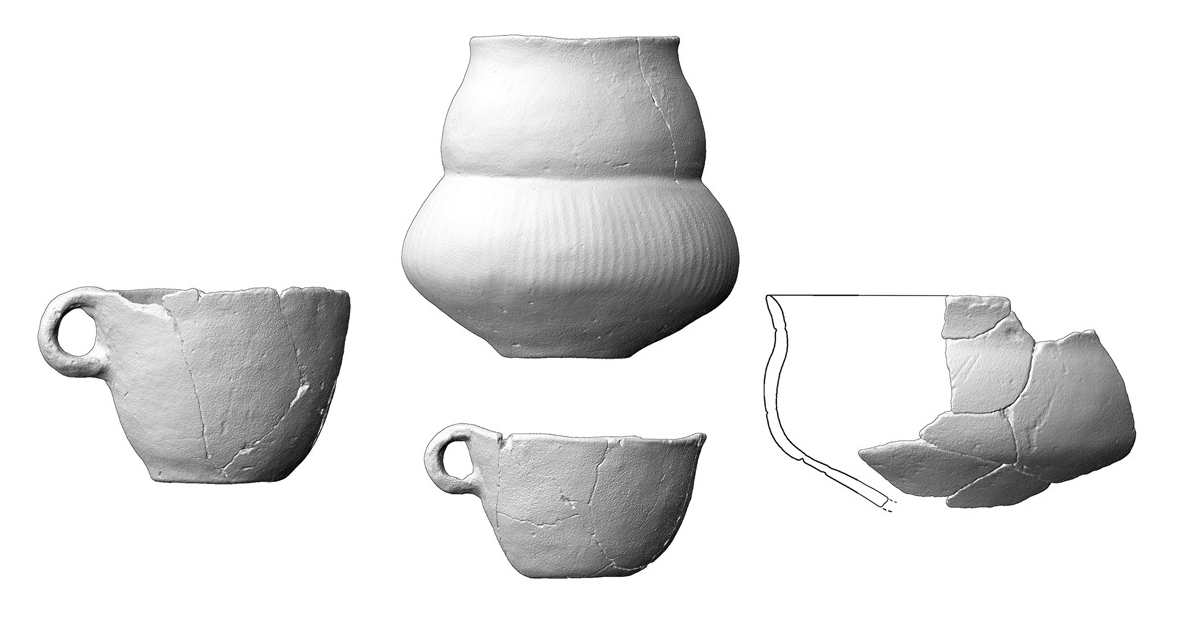
Archaeologists have made a step toward uncovering the history of the Lusatian Urnfield Cemetery at Brzezie in the Pleszew region of Greater Poland. After many years of fieldwork, including geophysical prospecting and excavation, materials for radiocarbon and luminescence dating were collected to determine the absolute chronology of the site.

In a study four samples were dated using OSL. The luminescence dating was made possible by measuring the dose rates in small archaeological samples using the innovative uDOSE system. The results reveal an agreement between radiocarbon and OSL dating methods, providing a date range of 1000-500 BC.

This new study provides valuable insights into the history of the Lusatian Urnfield Cemetery at Brzezie and the uDOSE system helped to provide a more accurate estimate of the dose rates for OSL dating.

Ginter, A.; Moska, P.; Poręba, G.; Tudyka, K.; Szymak, A.; Szczurek, G. Absolute Dates of Artifacts from Lusatian Urnfield Cemetery at Brzezie, Greater Poland. Radiocarbon 2022, 64 (6), 1471–1482. https://doi.org/10.1017/RDC.2022.70

Study Examines Impact of Internal Dose Rates on Luminescence Dating Results in Quartz Grains with uDOSE System

Study Examines Impact of Internal Dose Rates on Luminescence Dating Results in Quartz Grains with uDOSE System

A new study (Szymak et al., 2022) has examined the impact of internal alpha and beta dose rates in quartz grains obtained from sandy sediments on the results of luminescence dating. The internal dose rates, which range from 0.01-0.21 Gy/ky, play a non-negligible role in determining the accuracy of luminescence dating results, especially when the external dose rates are low.

To measure the internal and external dose rates in quartz grains, the researchers used the innovative uDOSE system. The findings of the study showed that ignoring the contribution of the internal dose rates could result in artificially older luminescence ages.

Szymak, Agnieszka, Moska, Piotr, Poręba, Grzegorz, Tudyka, Konrad and Adamiec, Grzegorz. „The Internal Dose Rate in Quartz Grains: Experimental Data and Consequences for Luminescence Dating” Geochronometria, vol.49, no.1, 2022, pp.9-17. https://doi.org/10.2478/geochr-2022-0002

miDose Solutions at DLED2022

miDose Solutions at DLED2022

We are happy to let you know that miDose Solutions was once again present at the DLED Conference (4-6 Nov). This year’s edition was organised by the University of Cologne and took place in Bonn, Germany.

Our fellow researchers and participants were able to visit our stand and get a closer look at the equipment we offer and had a chance to ask any and all questions they had.

Our representatives also presented posters of their work and research, which included the practical use of the μDose System.

The Conference was a lot of fun, both professionally and socially speaking 😄 and we are looking forward to the next one!

(by J. Rocznik)

μRate

μRate

Try μRate free dose rate calculator for trapped charge dating

It takes into account all corrections described in the literature, allows storing results, recalculating the dose rate for different assumptions and much more. 

It can be used anonymously as well! 

Described in Archaeometry https://doi.org/10.1111/arcm.12828

miu-Rate

miDose Solutions is in Colorado!

miDose Solutions is in Colorado!

We are happy to announce that we are present at the New World Luminescence Dating Workshop (NWLDW) in Palisade, Colorado. You’ll be able to find us at our stand at the NWLDW where we’ll gladly answer any questions that you may have about our company and our services. We’ll also be demonstrating how the μDose System works and its advantages. We hope to speak to you!

The NWLDW takes place between 13th and 16th October.

(by J. Rocznik)

µDose system application in OSL dating for establishing land use practices in the Middle Bronze Age

µDose system application in OSL dating for establishing land use practices in the Middle Bronze Age

A reconstruction of land use practices that were performed in the Middle Bronze Age in north-western Alpine foreland was conducted by Scherer et al., (2021). It includes a reconstruction of the colluvial deposition phases obtained through OSL and AMS C-14 dating of the deposits and archaeological data. For OSL dating isotope dose rates (U-238, Th-232, K-40) were established using thick source alpha-counting and the µDose System.

Scherer, S., Höpfer, B., Deckers, K., Fischer, E., Fuchs, M., Kandeler, E., … Kühn, P. (2021). Middle Bronze Age land use practices in the northwestern Alpine foreland – a multi-proxy study of colluvial deposits, archaeological features and peat bogs. SOIL, 7(1), 269–304. https://doi.org/10.5194/soil-7-269-2021

(by J. Rocznik)

Application of Cs-137, Pb-210 and dendrochronology dating for erosion-sedimentation event study

Application of Cs-137, Pb-210 and dendrochronology dating for erosion-sedimentation event study

In order to better reconstruct erosion-sedimentation events in loess gully system in southern Poland, a combination of 137Cs, 210Pb (HRGS; γBeaker) and dendrochronology dating was performed by Malik et al., (2021) for 136 soil samples and 63 root and tree samples collected from 8 research profiles. The comparison of the results from both isotopic methods provided an approximate age and erosion type for soil samples; dendrochronology, however, allowed for soil degradation event assessment.

Malik I, Poręba G, Wistuba M and Woskowicz‐Ślęzak B, 2021, Combining 137Cs
, 210Pb and dendrochronology for improved reconstruction of erosion–sedimentation events in a loess gully system (southern Poland). Land Degradation & Development 32(7): 2336–2350, DOI: 10.1002/ldr.3903.

(by J. Rocznik)